A Homeowner's Guide to Installing Snow Guards on Metal Roofs
When the temperature drops and winter weather rolls into The Queen City, homeowners start thinking about how well their homes will hold up against snow and ice. Metal roofs have become incredibly popular in recent years, and for good reason. When weighing the pros and cons of metal roofing versus traditional asphalt shingles, metal often wins out due to its incredible longevity, eco-friendly nature, and striking aesthetic. However, that smooth, durable surface comes with a unique winter challenge: rooftop avalanches.
Without the natural friction provided by the granular surface of asphalt shingles, snow and ice can accumulate on a metal surface and suddenly slide off in large, heavy sheets. This isn't just an inconvenience; it can be a serious safety hazard for anyone walking below, and it can cause significant damage to your property. That is why installing standing seam metal roof snow guards is a crucial step for anyone upgrading their home's exterior.
In this guide, we will explore why these devices are so important, how they work to protect your home, and the different installation methods available to ensure your roof remains in pristine condition.

Preventing Metal Roof Snow Slides
The primary function of a snow guard is simple: to hold snow and ice on the roof, allowing it to melt slowly and drain off safely rather than falling all at once. Preventing metal roof snow slides is essential for protecting your landscaping, your driveway, and the people who live in or visit your home. Imagine a heavy sheet of compressed snow plummeting onto your patio, your car, or the walkways surrounding your house. The impact can be surprisingly destructive.
Beyond the safety of people and pets, these sudden slides can wreak havoc on your home's exterior features. Protecting gutters from metal roof snow is one of the most common reasons homeowners reach out to roofing companies during the colder months. When a massive sheet of ice slides down, it can catch the lip of your gutters, tearing them completely off the fascia board or bending them beyond repair. If you have recently invested in professional gutter installation & repair, the last thing you want is for a preventable snow slide to ruin that investment.
Pipe Snow Guard vs Clamp Installation
When it comes to outfitting your roof for winter, not all retention systems are created equal. Homeowners generally choose between a few different styles, but the most common debate is the pipe snow guard vs clamp installation.
Pipe systems consist of brackets attached to the roof holding one or two horizontal metal pipes. They are highly effective for areas that receive heavy snowfall, creating a robust barrier that holds back large volumes of snow. On the other hand, pad-style guards are smaller, individual brackets staggered across the roofline to distribute the weight of the snow evenly.
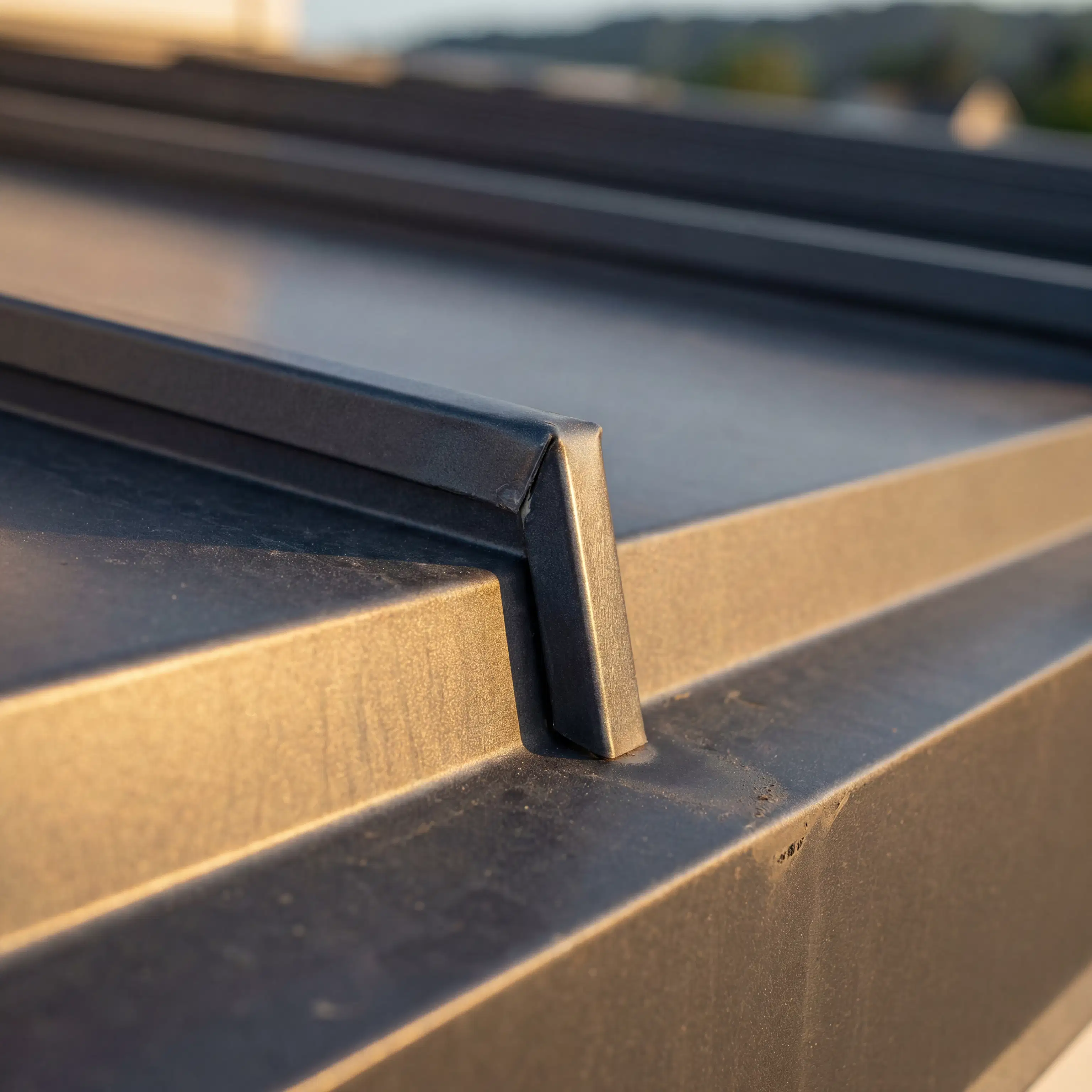
For homeowners with a standing seam metal roof, the method of attachment is just as important as the style of the guard. The beauty of a standing seam roof is that it features concealed fasteners, meaning there are no exposed screws or holes where water can penetrate. Therefore, any retention system should utilize a clamp-on mechanism. These specialized clamps attach directly to the vertical seams of the roof without piercing the metal panels. This preserves the manufacturer warranty and the contractor workmanship warranty while ensuring your roof remains completely watertight. Piercing the metal panels can lead to leaks, which defeats the purpose of investing in such a high-quality material.
Technology and Accurate Roofing Estimates
If you are wondering how to know if your roof needs to be repaired or completely replaced before winter sets in, modern technology has made the process easier and more transparent than ever. Leading roofing services now utilize advanced tools like drone-based inspections and AI-powered 3D aerial modeling. These innovations allow professionals to capture precise measurements of your roof's pitch, square footage, and seam spacing without spending hours on a ladder.
This technology is particularly useful when calculating the roofing cost for a new metal system and the accompanying snow retention layout. Because estimating material costs can be complex with fluctuating supply chain prices, aerial modeling ensures that your estimate is incredibly accurate. It takes the guesswork out of determining exactly how many linear feet of pipe or how many individual clamp-on guards are required to adequately protect your specific home.
Furthermore, for homeowners concerned about the financial aspect of significant upgrades, receiving a detailed, technology-backed estimate helps in exploring flexible financing options. Funding large upfront material costs can be daunting, but with transparent pricing and manageable payment plans, securing your home against winter weather is well within reach.

Preparing Your Home for the Seasons Ahead
A typical roof replacement project takes careful planning, especially when upgrading to premium materials like standing seam metal. While the upfront investment is higher, the expected lifespan of these materials can exceed fifty years, making them a fantastic long-term choice. By completing the system with the proper retention hardware, you are actively protecting your property from the harsh realities of winter weather.
Whether you are looking to retrofit an existing metal roof with clamp-on guards or you are ready to explore comprehensive roof replacement & new installations, working with a licensed and insured contractor is vital. Strict safety regulations and proper installation techniques ensure that your home remains safe, dry, and beautiful year-round.
If you are a proud Buckeye State homeowner looking to prepare your property for whatever the winter season throws our way, our team is here to help. Contact 513 Roofing today to schedule a thorough drone-assisted inspection, discuss your material options, and receive an accurate, transparent estimate for your next exterior project.